From Donor-Derived to Engineered: Expanding the Possibilities for Regenerative Biomaterials
Advances in biomaterials are creating new opportunities to engineer tissue-repair products with greater control over their composition, architecture, degradation and manufacture.
Synthetic materials are an important part of this evolution. By designing these characteristics around the intended application, medical-device developers can create regenerative structures that combine biological function with reproducible and scalable manufacturing.
This approach has been part of The Electrospinning Company’s work for many years.
An early example in corneal regeneration
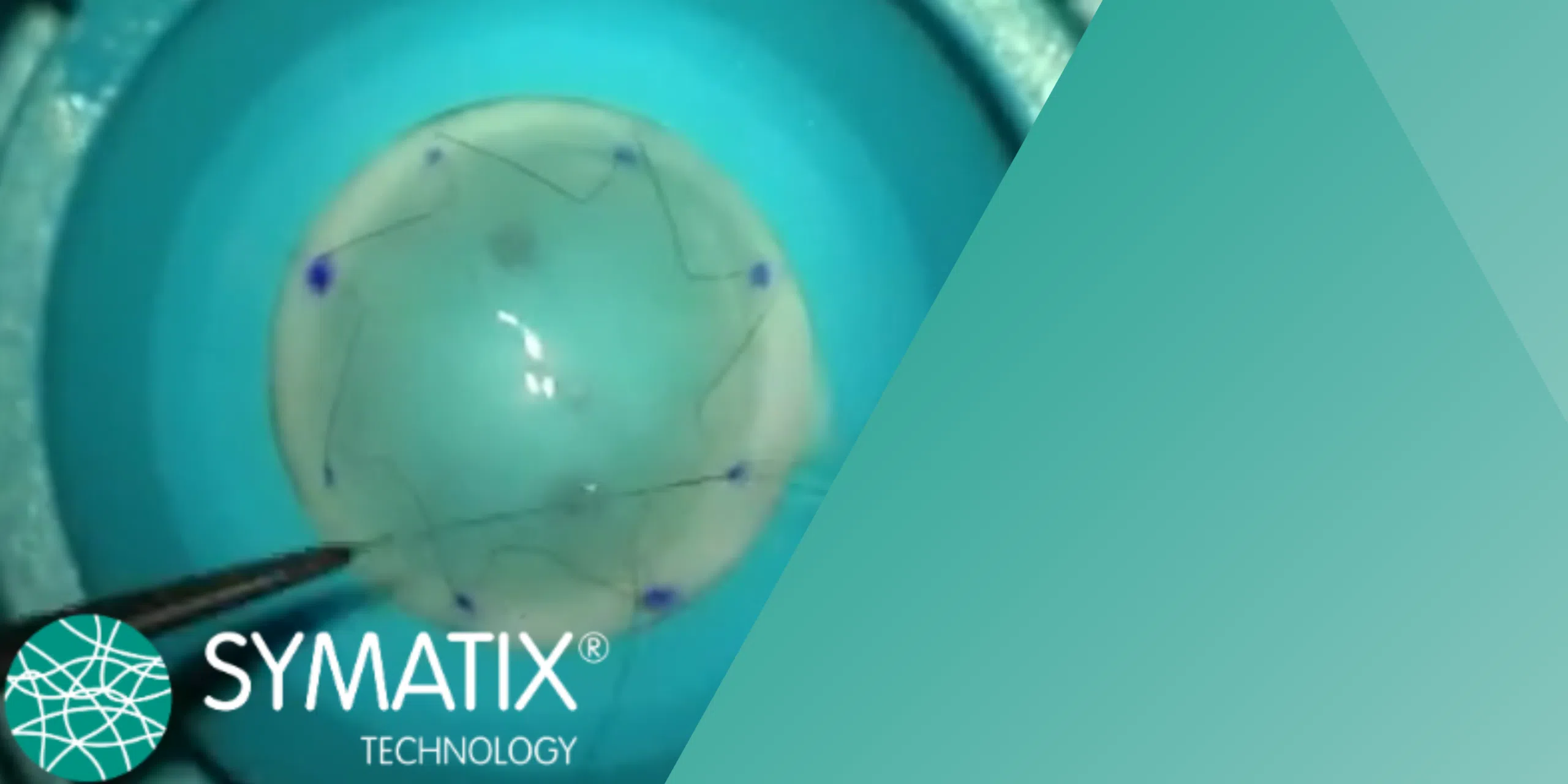
In research published in the British Journal of Ophthalmology, electrospun PLGA membranes manufactured by The Electrospinning Company were investigated as biodegradable synthetic alternatives to human amniotic membrane for corneal regeneration.
The programme evaluated both plain electrospun membranes and microfabricated variants designed to reproduce features of the natural limbal stem-cell environment.
In a preclinical rabbit model, the membranes were well tolerated and completely degraded within 29 days, with no significant local or systemic toxicity observed.
The study provided an early demonstration of how electrospinning can be used to create a biodegradable, tissue-facing structure with defined material, architectural and degradation characteristics.
Growing commercial relevance
Today, the opportunity for engineered synthetic biomaterials is expanding across tissue repair and regenerative medicine.
The 2026 CMS reimbursement model in US wound care is bringing increased focus to technologies that can combine clinically relevant performance with efficient, reproducible and scalable manufacture.
This creates a timely opportunity for developers to explore how engineered material platforms can support the next generation of wound-healing and tissue-repair products.
The corneal programme provides an early example of the same design principle: starting with the requirements of the application and using electrospinning to create a controlled structure around them.
Engineering for the application
Today, The Electrospinning Company brings this application-led approach to regenerative medicine through platforms such as our Symatix® and Mimetix® Technology platform, alongside custom development capabilities.
Material selection, fibre architecture, degradation and tissue-facing characteristics can be developed around the intended application, while process development and manufacturability can be considered from the outset.
This is backed by more than 10 years of medical device electrospinning experience, 100+ feasibility projects, and components in 5 FDA 510(k)-cleared devices. Together with our scale-up expertise and ISO 13485 manufacturing capability, this provides developers with a pathway from early feasibility through development and towards commercial manufacture, as demonstrated in our work developing Artifascia®, an electrospun dura mater repair membrane, with Nurami Medical.
Research reference: Synthetic biodegradable alternatives to the use of the amniotic membrane for corneal regeneration: assessment of local and systemic toxicity in rabbits, British Journal of Ophthalmology, 2018. https://bjo.bmj.com/content/103/2/286