Opens in a new tab

Pioneers in the Development, Manufacture and Commercialisation of Electrospun Orthopaedic Materials

TECL develops and manufactures electrospun membranes, scaffolds, grafts, tissue-interface materials and hybrid structures for orthopaedic and sports medicine devices.

We connect material composition and fibre architecture to device requirements, verification, scale-up and controlled manufacture.

Application Areas

Electrospun materials for orthopaedic and sports medicine devices

Material architecture can be developed around fixation, handling, degradation, load sharing and the tissue-facing function required by the device.

01

Tendon, ligament and soft-tissue repair

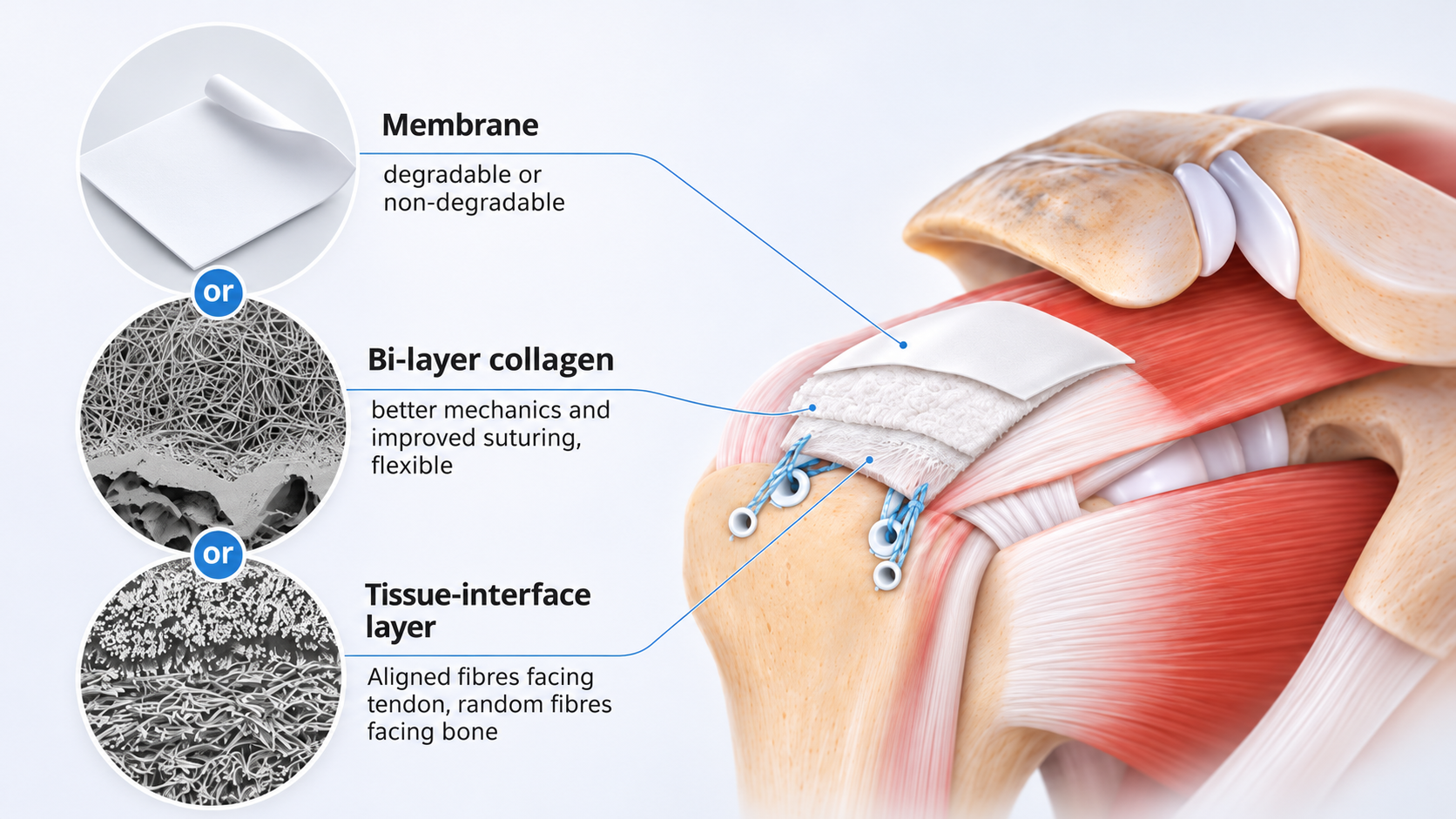
Electrospun membranes, scaffolds and reinforcement layers can be developed and manufactured for tendon, ligament, rotator cuff, Achilles and other soft-tissue repair applications.

The material architecture can be adapted to the required fixation, handling, suture retention, mechanical performance and tissue-facing structure.

02

Guided bone regeneration

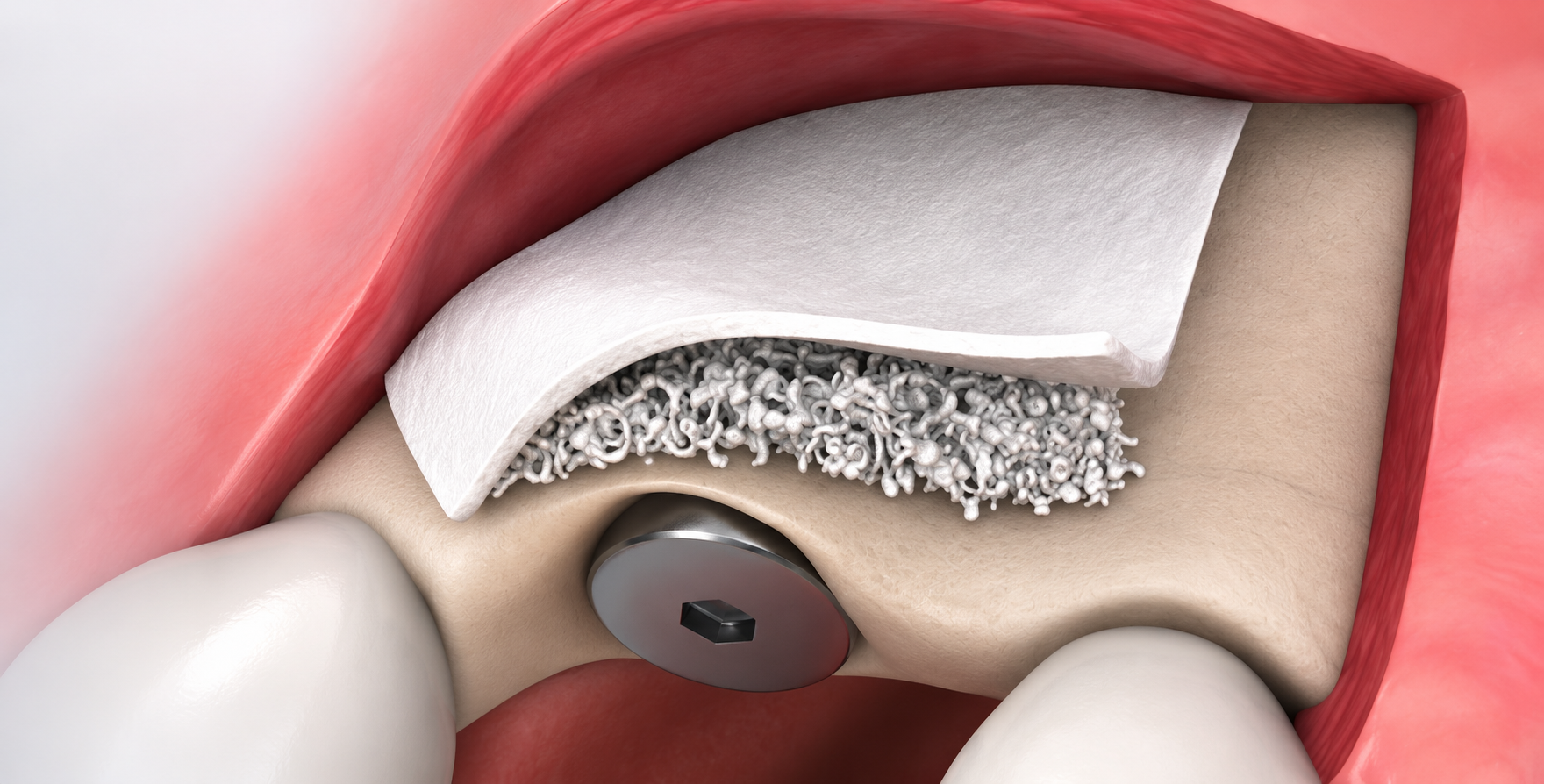
Electrospun barrier membranes can be developed for bone repair, spinal fusion and complex orthopaedic defects.

TECL can support membrane design and manufacture around the required degradation profile, fluid transport, dimensional stability and handling characteristics.

03

Grafts, patches and tissue-interface structures

Electrospun materials can be manufactured as standalone structures or integrated with textiles, meshes, grafts, anchors, screws and other device components.

This allows structural reinforcement and the electrospun interface to be considered within one device architecture.

Product Configuration

Custom formats, sterilisation and packaging

01

Custom dimensions and formats

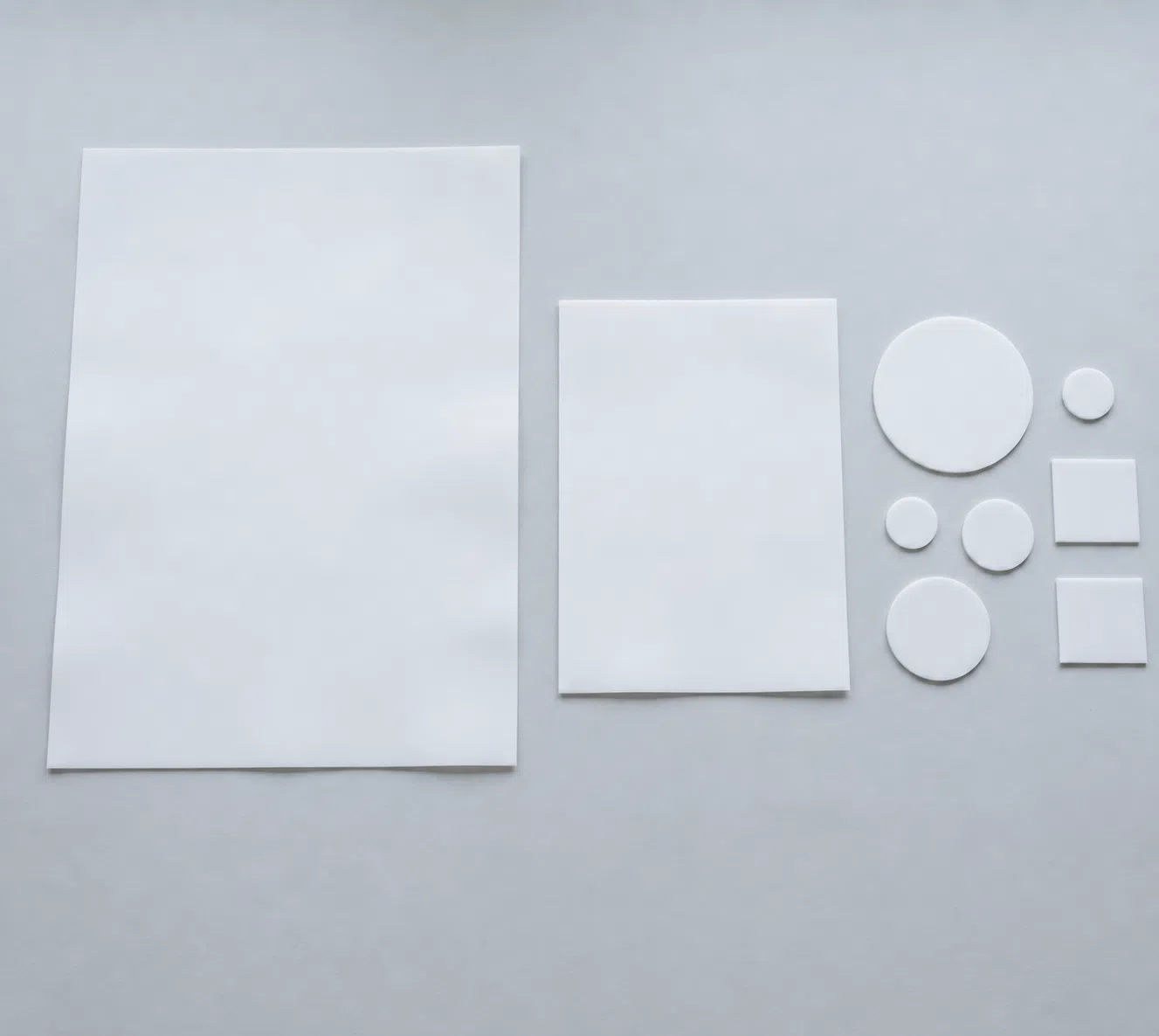
Material dimensions, shape, thickness and format are customised to the product design.

02

Packaging

Packaging options are defined around intended handling, sterilisation and the downstream manufacturing process.

03

Sterilisation assessment

Gamma irradiation, ebeam, and ethylene oxide (EtO) can be assessed for the selected material, substrate, format and packaging.

04

Product specific validation

Compatibility is confirmed through product specific testing and validation of the final configuration.

Architecture & reinforcement 

Formats and substrate integration

TECL develops and manufactures both standalone electrospun materials and hybrid constructions.

Standalone materials can be engineered through control of polymer selection, fibre architecture, alignment, thickness, porosity, collection and post-processing. Their achievable performance depends on the intended load, delivery method, fixation approach and degradation requirements.

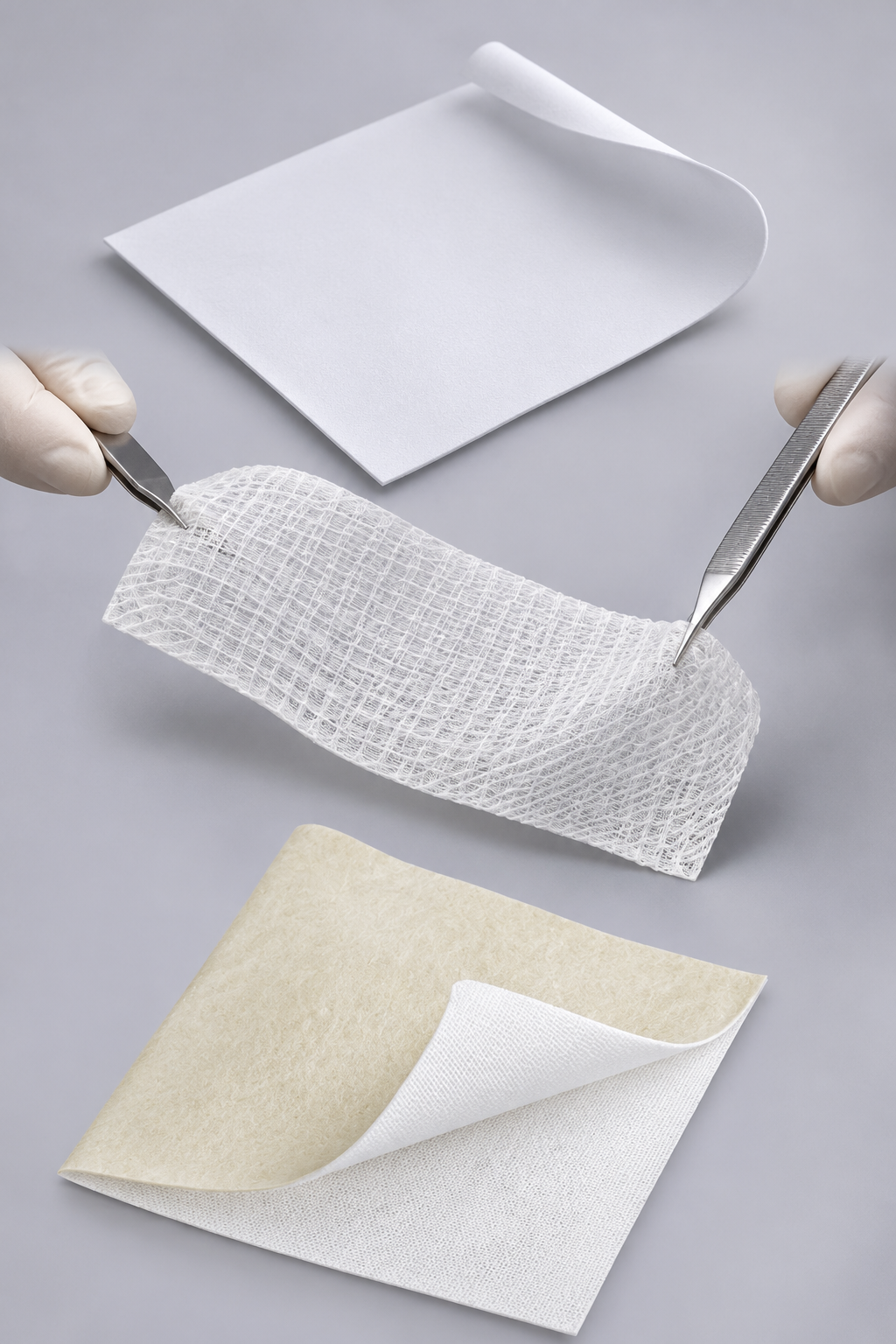
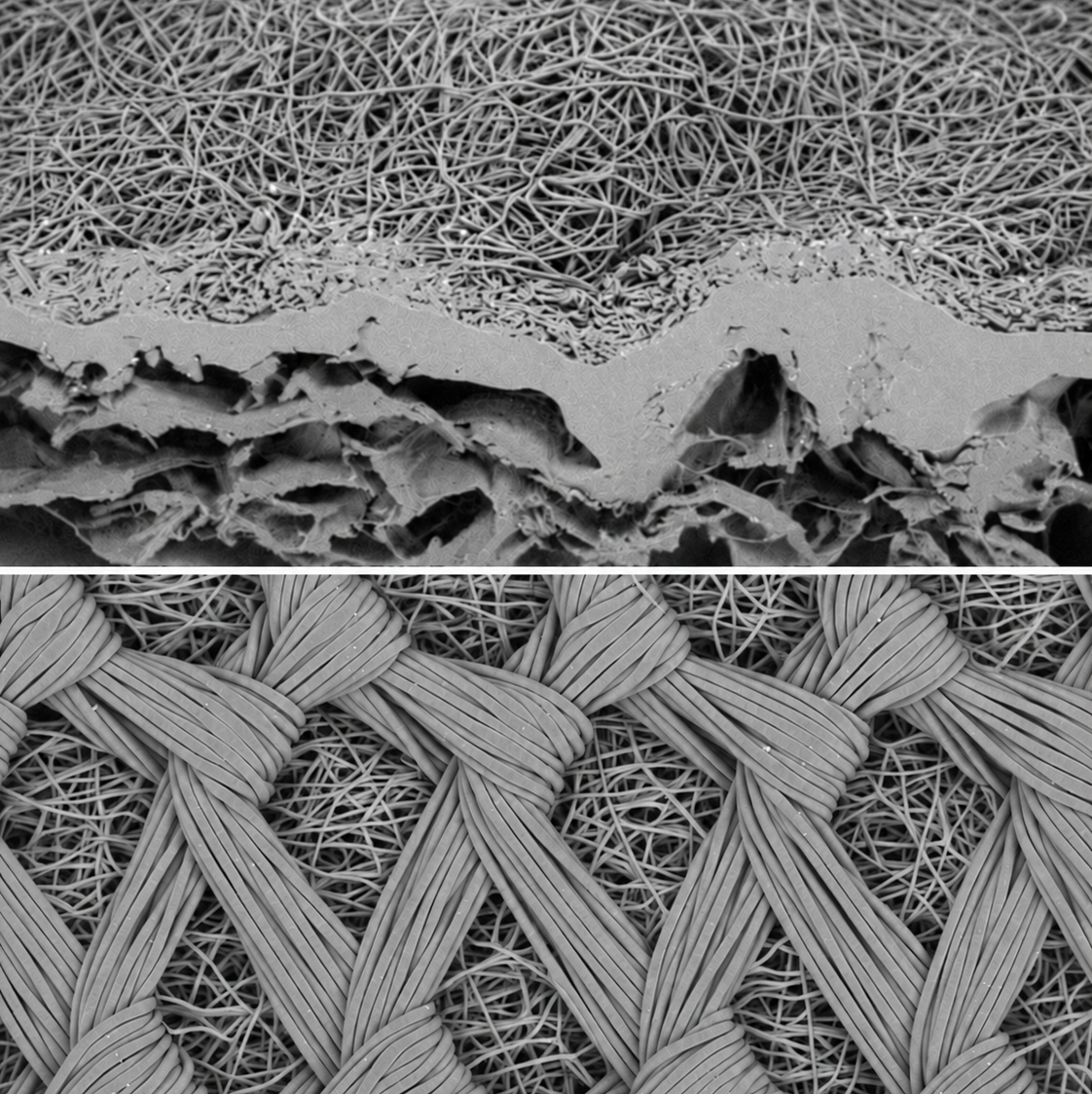
Where additional reinforcement is required, electrospun materials can be combined with woven or braided textiles, meshes, machined cores or printed structures.

These hybrid constructions can provide additional load sharing, shape retention or suture retention while retaining the functional role of the electrospun layer.

TECL assesses the complete construction, including the interface between the electrospun layer and the reinforcing component.
From top to bottom: Standalone electrospun membrane, electrospun membrane reinforced with woven mesh, and electrospun membrane combined with collagen.
Technology Platforms

Platforms for orthopaedic materials

Our platforms offer resorbable and non-resorbable material solutions for orthopaedic applications, including soft tissue repair, reinforcement and tissue interfaces.

Biosynthetic materials

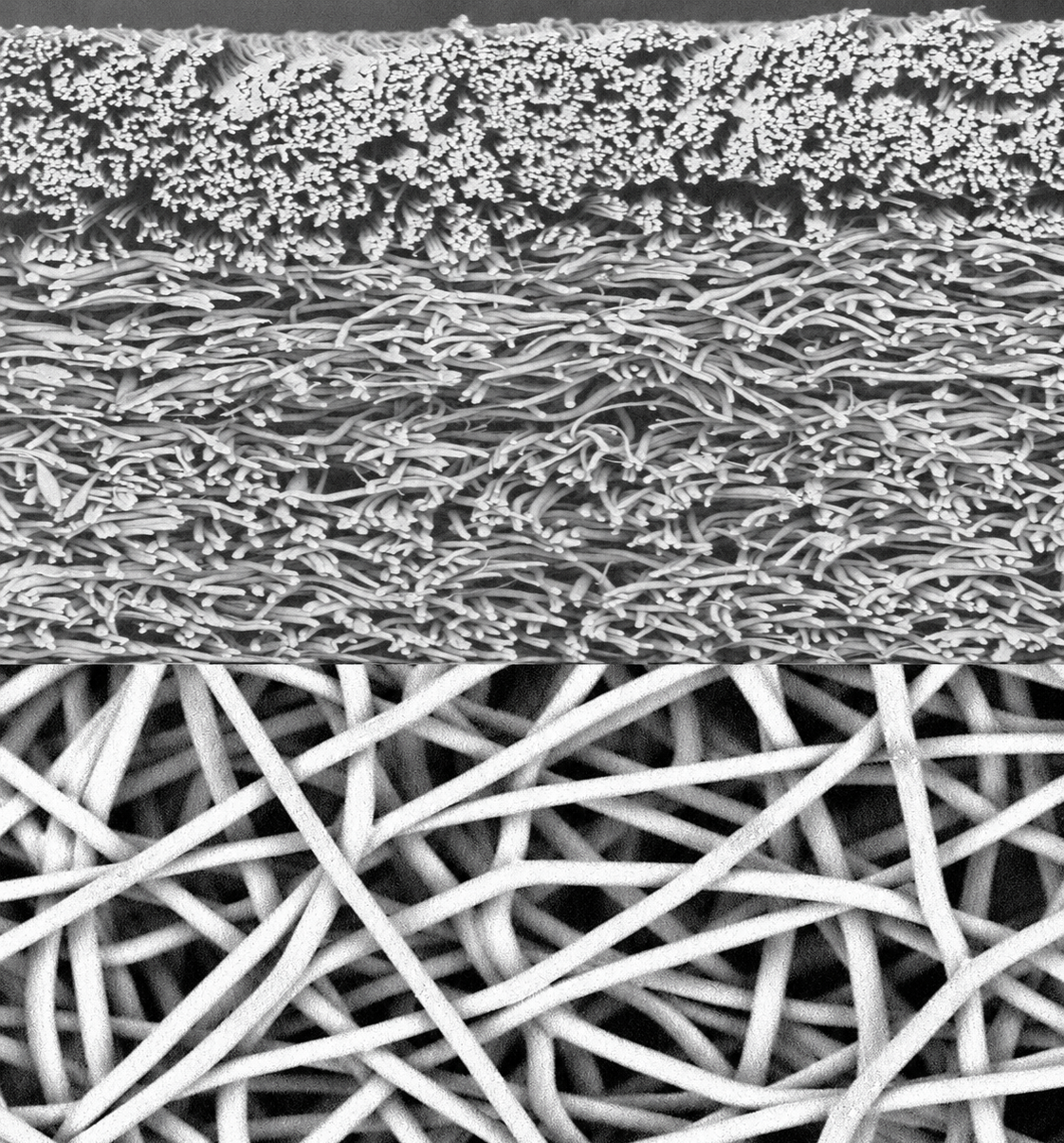
The Symatix® platform combines resorbable synthetic fibre structures with natural materials such as collagen, hyaluronic acid and chitosan, or with selected biological molecules.

TECL connects Symatix® composition and architecture to electrospinning parameters, handling, stability, verification and manufacturing requirements. Structures may incorporate biopolymers such as collagen, hyaluronic acid and chitosan, depending on the intended application. 

Diagram of blended, core-shell and pore-filled electrospun material architectures.
Symatix® architectures for incorporating natural materials and biological molecules.
01

Blended fibres

Combine selected natural materials or biological molecules with the fibre system.

02

Core-shell fibres

 The core can provide the primary mechanical contribution while the shell presents the selected biopolymer at the material interface. 

03

Pore-filled structures

Introduce selected materials into spaces within the electrospun fibre network.

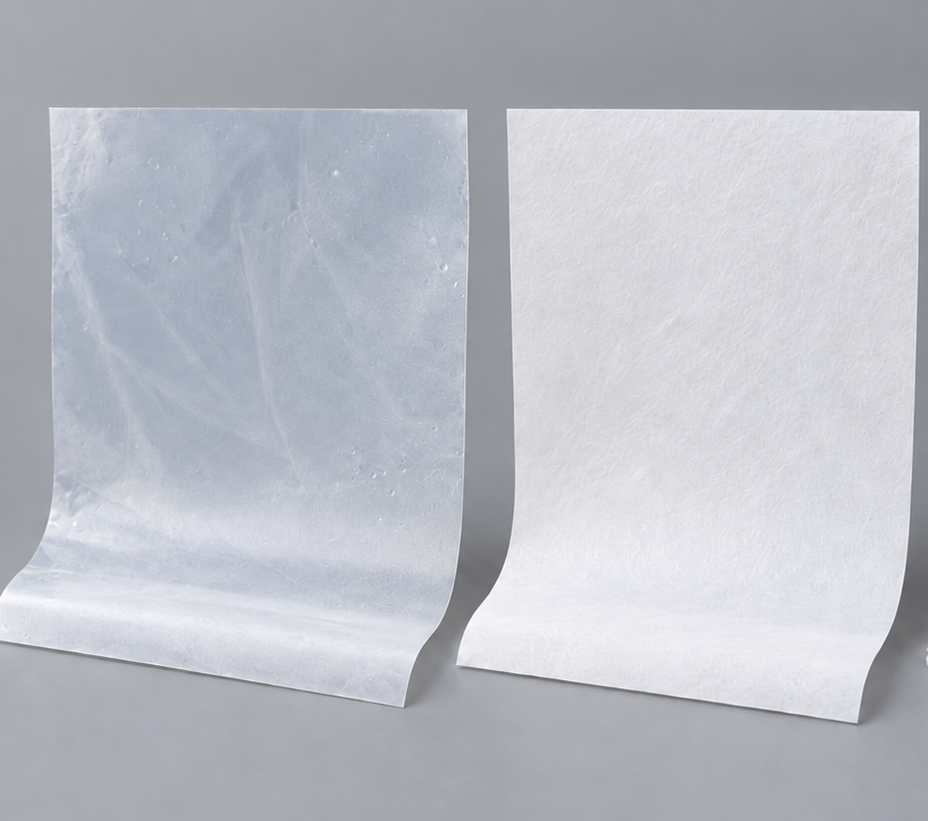
Thin electrospun membrane beside a thicker open fibre scaffold.
Mimetix® resorbable membranes can be supplied in different formats

Resorbable materials

The Mimetix® platform creates electrospun scaffolds from selected resorbable polymer systems, including PCL, PLA, PDO, and PLGA, and specialised polymers like degradable polyurethanes  for temporary support, barrier membranes and tissue-interface applications.

Explore Mimetix® technology →
Formats

Electrospun membranes and sheets, scaffold matrices, and thicker, more open structures such as Mimetix® Air. Dimensions and shapes are customised for the intended product format.

Permanent materials

Permanent electrospun fibre structures for applications requiring longer-term material presence. This includes polymers used in Medtech like PET and TPU.

Explore Kalyptix® technology →
Diagram of blended, core-shell and pore-filled electrospun material architectures.
Kalyptix® for coated devices and permanent materials.
Thin electrospun membrane beside a thicker open fibre scaffold.
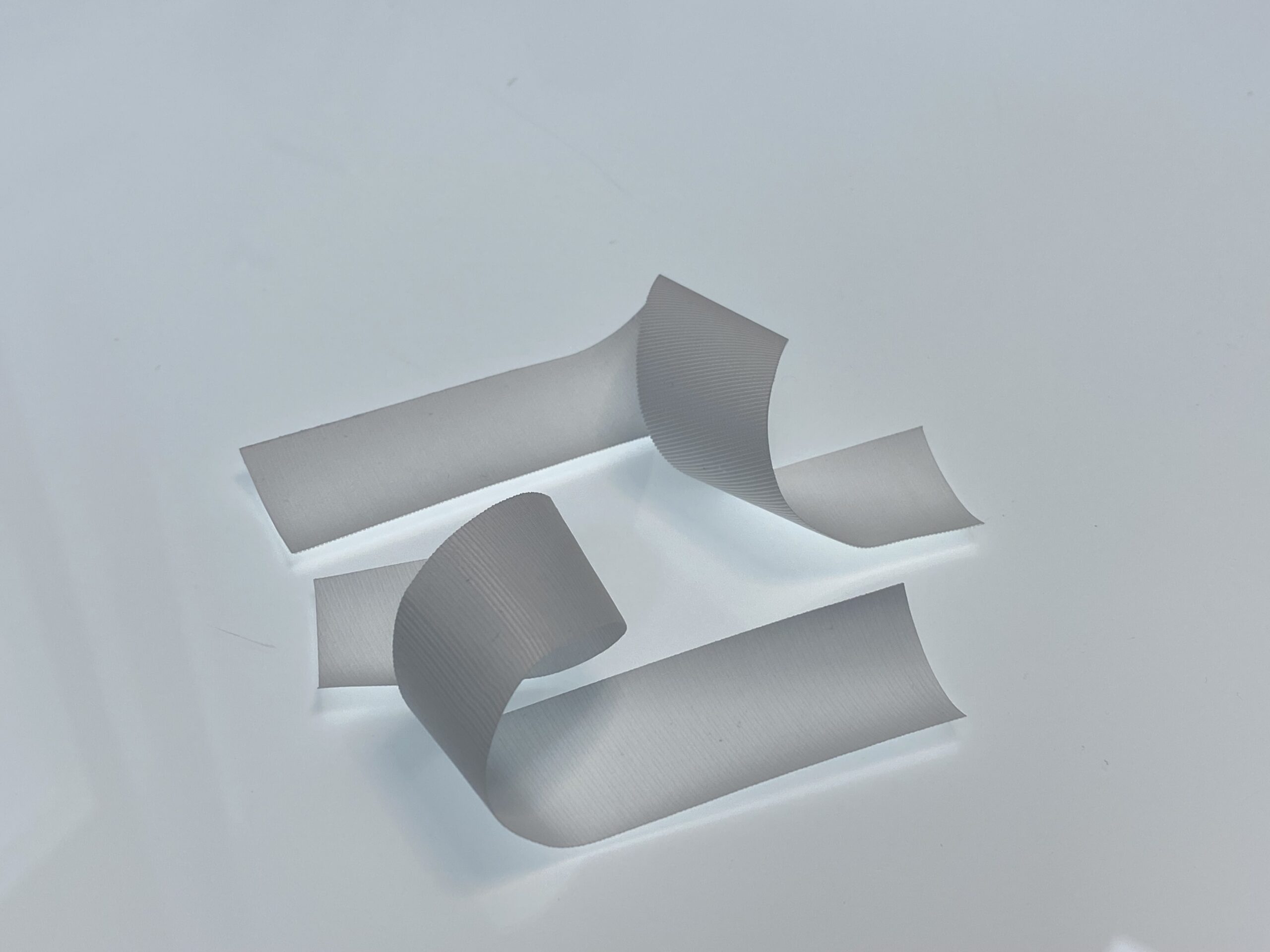
Caladrix® platform provides electrospun coatings and coverings on medical devices.

Coatings

Electrospun coatings for existing medical substrates, textiles and device components. This includes electrospinning on to biopolymers like collagen membranes or patches, or spinning on medical textiles.

Explore Caladrix® technology →
Development to Manufacture

From prototype to scalable manufacture

Projects can progress through product and process development, verification and validation, scale-up and manufacturing.

Validated testing is planned around the product’s critical requirements and intended use.

Cost of goods considered early

Material choice, process yield, conversion, sterilisation and packaging are considered against target costs, commercial pricing assumptions and the intended reimbursement pathway.

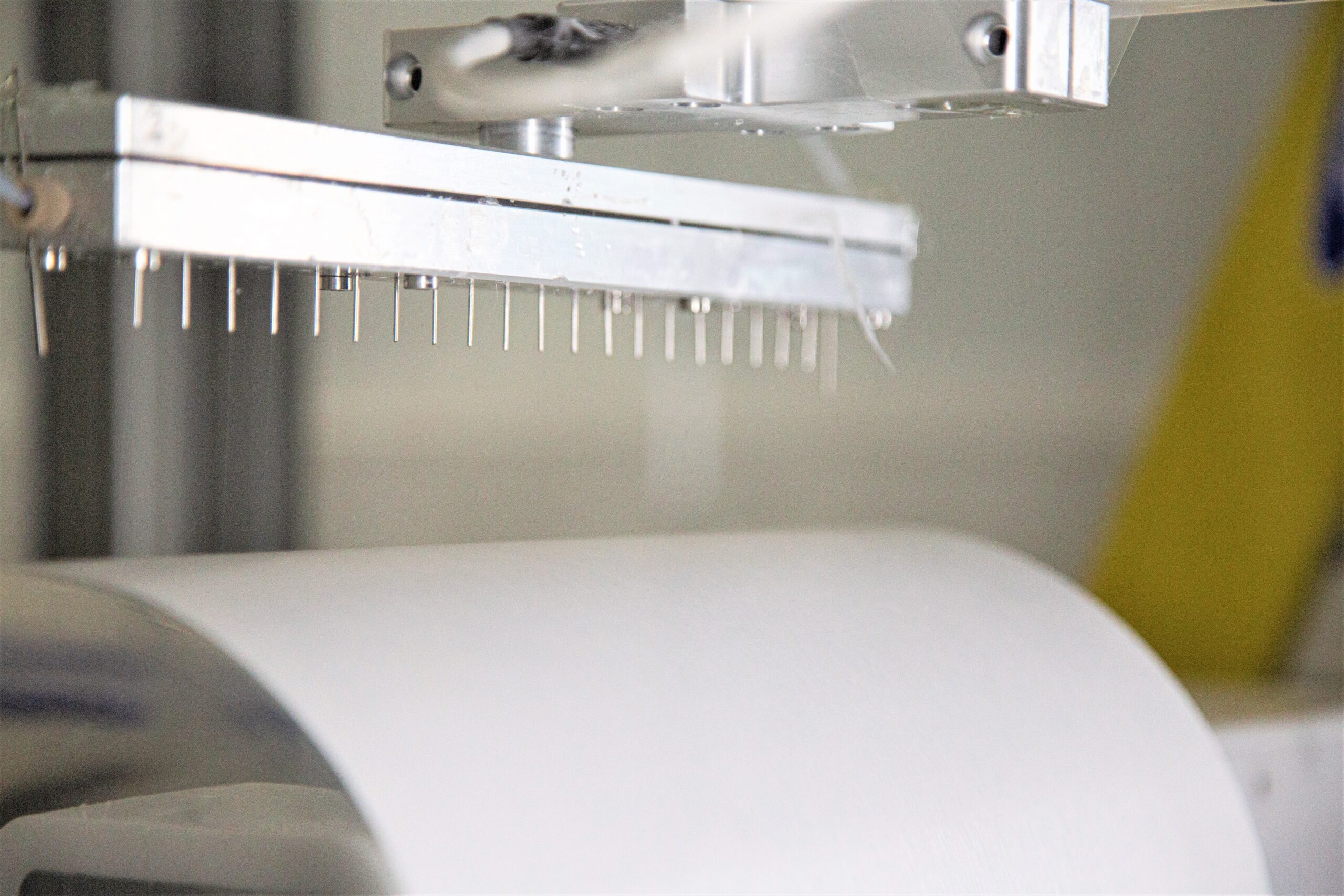
Electrospinning equipment used for medical material process development.
TECL supports material development, verification, validation and scale-up under an ISO 13485:2016 quality management system.
Learn about our development process →
Proof beyond feasibility

Experience in regulated medical-device manufacture

Our approach provides a structured framework to ensure compliance, quality and traceability throughout the design, development and manufacturing process, while being flexible enough to meet the complexity of diverse regulatory requirements.

10+ years

Medical-device manufacturing experience

Continuous experience in electrospun medical-device development and manufacturing.

ISO 13485

Quality system & controlled manufacture

The company operates within an ISO 13485 quality system and manufactures in controlled cleanroom conditions.

FDA 510(k)

Commercial regulatory pedigree

The Elechas supplied materials and components for FDA 510(k)-cleared devices.

100+

Feasibility projects

Experience includes orthopaedic, cardiovascular, wound-healing and soft-tissue applications, with more than 100 feasibility projects completed across these sectors.