Electrospun Materials for Wound Healing
Fast route to market in a competitive environment. Rapid product development on established technology platforms.
Start with a concept or a ready-made prototype and develop a wound healing product with a viable cost of goods.
For teams developing novel and second generation wound healing devices, speed to market matters. We can provide prototypes of different materials, architectures and formats, with scalable production processes, from our Mimetix® and Symatix® platforms.
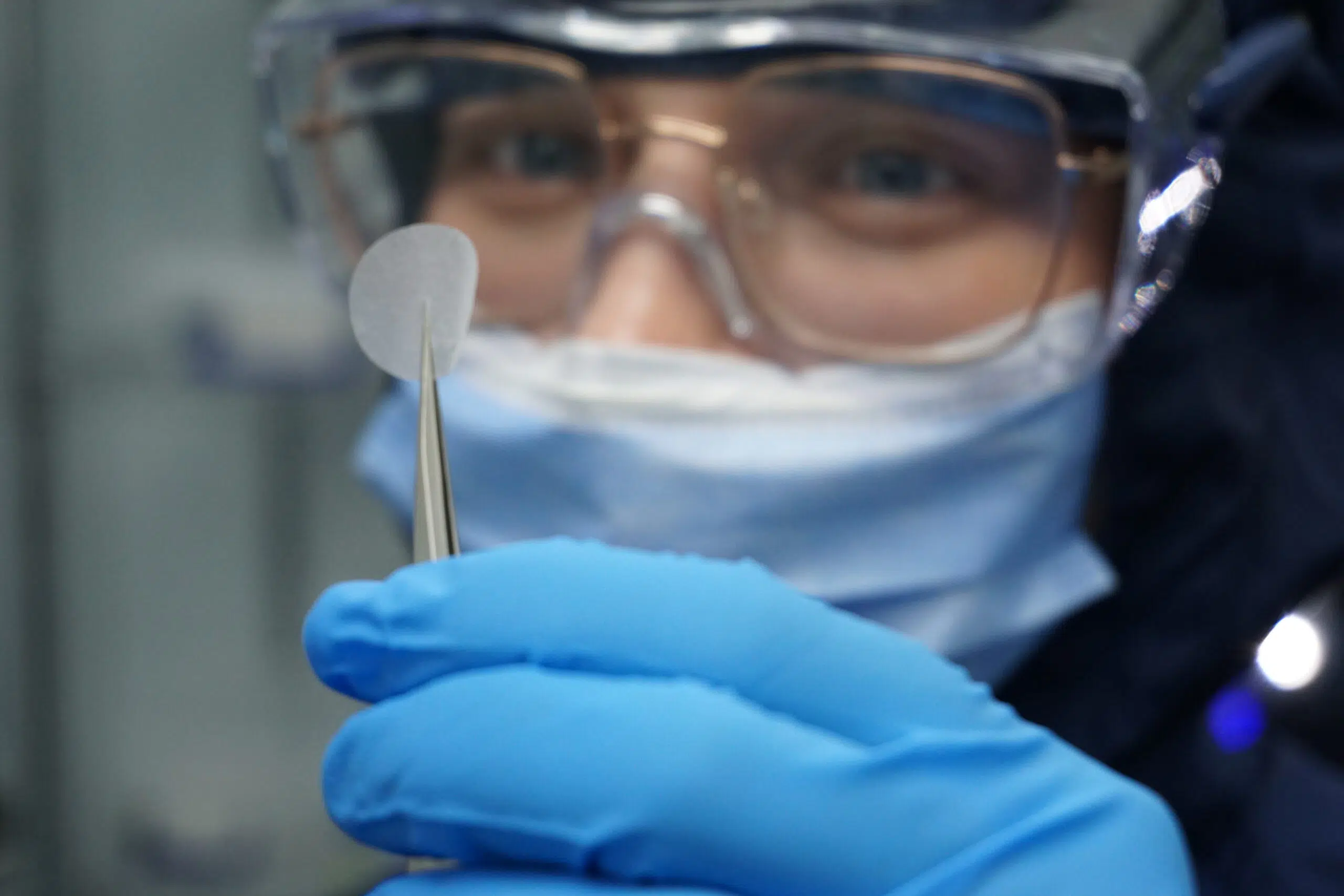
Platforms for degradable wound healing materials
Our Mimetix® and Symatix® platforms provide complementary routes to create resorbable wound healing materials.
Mimetix® scaffolds are made of synthetic resorbable polymers. Symatix® scaffolds combine the synthetic fibre structures with natural materials or biological molecules. Material choice and fibre architecture are tailored to the application and intended healing period.
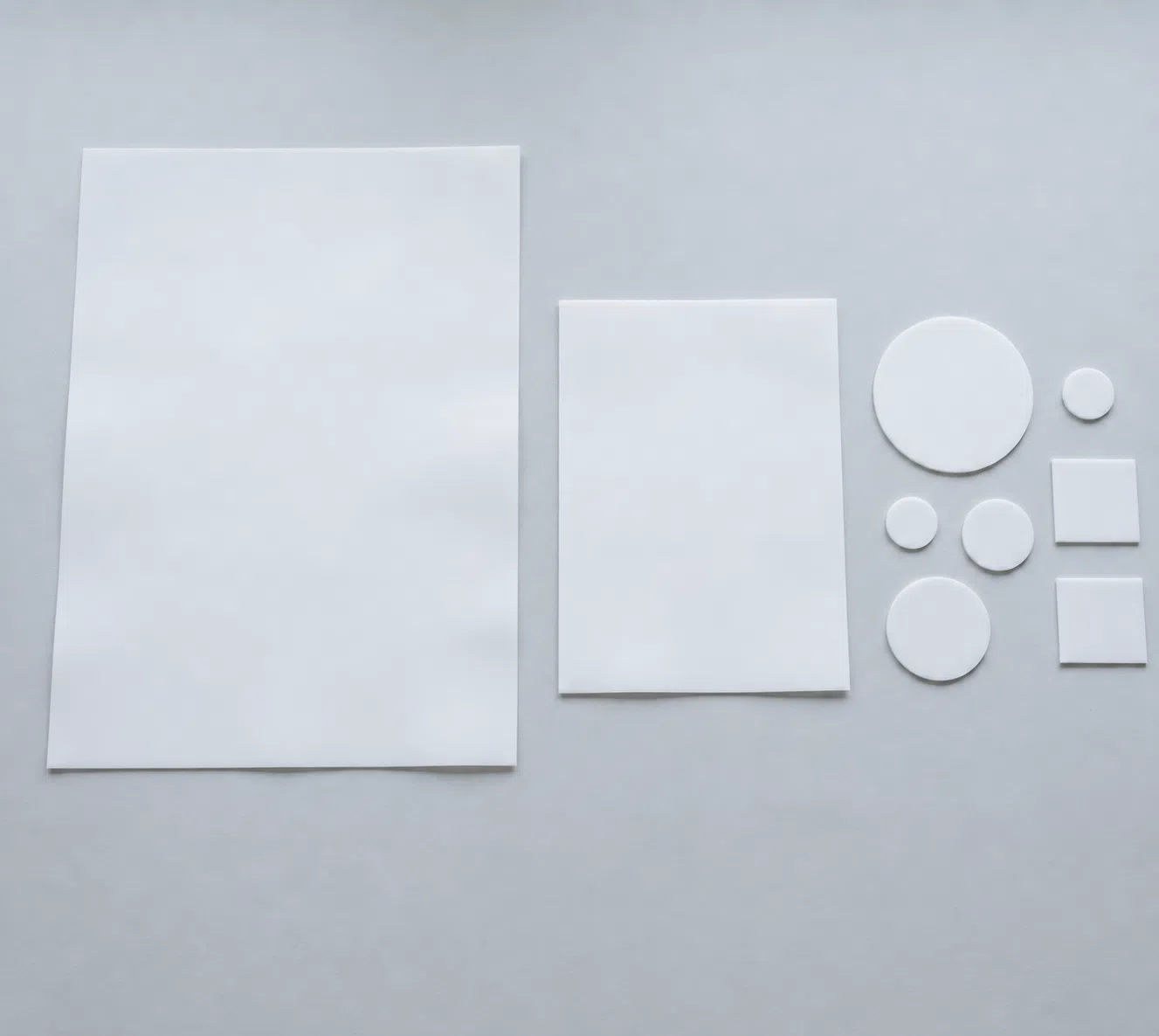

Resorbable materials
The Mimetix® platform creates electrospun scaffolds from selected resorbable polymer systems, including PCL, PLA, PDO, and PLGA, and specialised polymers like degradable polyurethanes.
These structures provide temporary support during tissue repair and are designed to degrade over time. Fibre architecture, orientation, porosity, thickness and post-processing can be tailored to the application and required degradation behaviour.
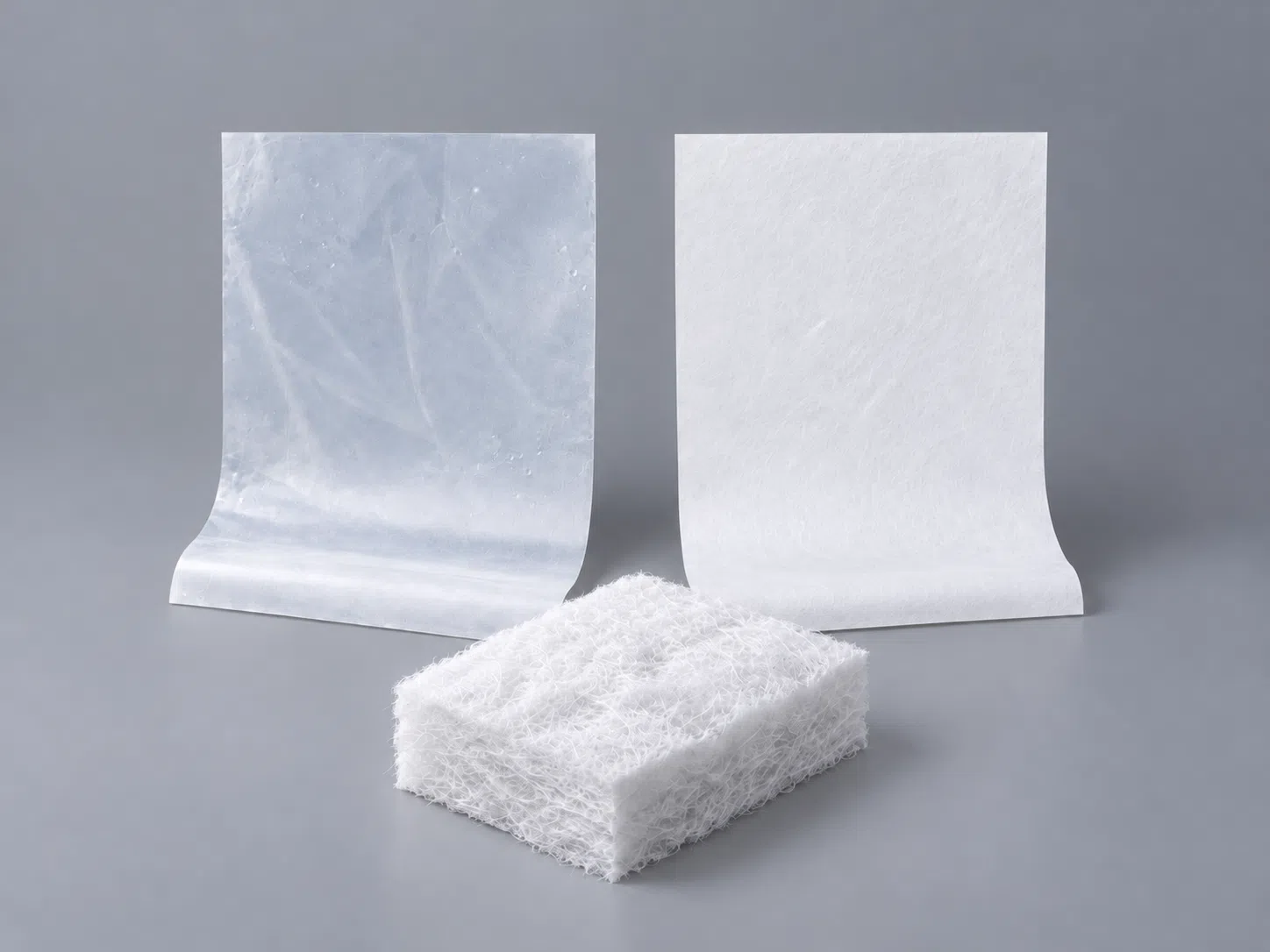
Electrospun membranes and sheets, scaffold matrices, and thicker, more open structures such as Mimetix® Air. Dimensions and shapes are customised for the intended product format.

Biosynthetic materials
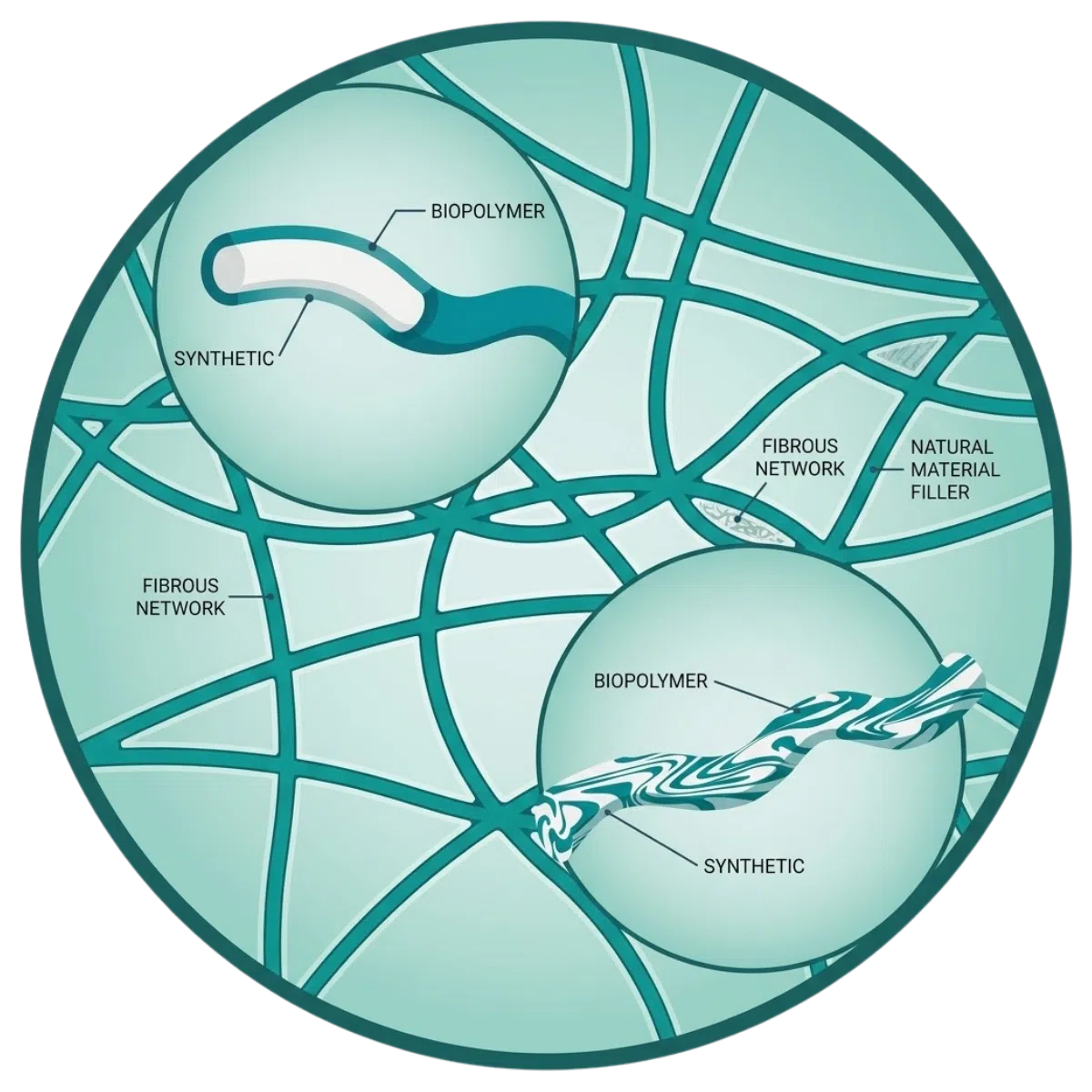
The Symatix® platform combines resorbable synthetic fibre structures with natural materials such as collagen, hyaluronic acid and chitosan, or with selected biological molecules.
Components can be incorporated in different ways to create biosynthetic membranes, scaffolds and matrices.
Blended fibres
Combine selected natural materials or biological molecules with the fibre system.
Core-shell fibres
Position components within the fibre core or shell to tailor their presentation and release profile.
Pore-filled structures
Introduce selected materials into spaces within the electrospun fibre network.
Start with a prototype, refine the specifications for your material or device.
Designed around wound healing requirements
Electrospun material performance depends on how fibre structure, porosity, thickness, mechanical behaviour, hydrophilicity and degradation work together.
Fibre architecture and porosity
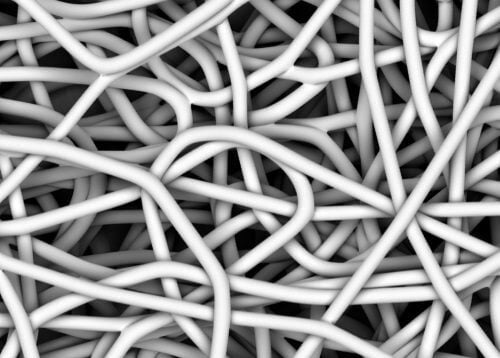
Set the structure and open space of the material around the application for cell and tissue integration to promote healing.
Handling and mechanics
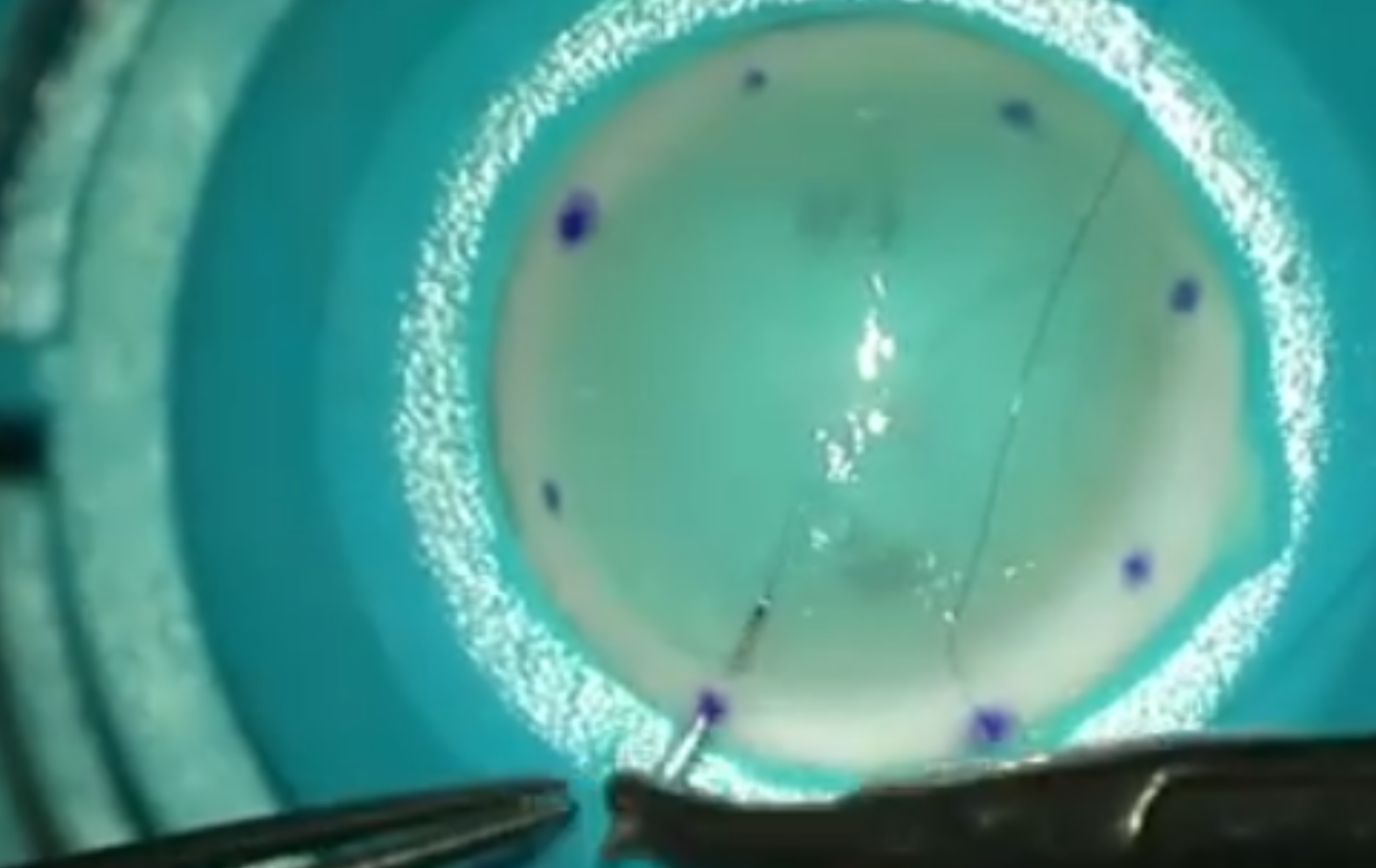
Develop flexibility, strength and suture related performance for the intended placement and use.
Fluid interaction & degradation
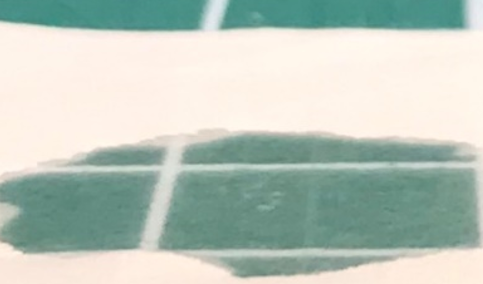
Assess wetting, exudate handling and permeability against product requirements. Select materials and structure around the intended indication and healing period.
Biological molecule presentation

Select an architecture to investigate the desired availability or release profile.
Formats and substrate integration
Mimetix® and Symatix® materials can be developed as standalone membranes or scaffold structures, or explored in combination with compatible medical textiles and natural membranes, including collagen based and amniotic membrane substrates.
Depending on the design, the electrospun material may be deposited onto, integrated with or layered alongside a substrate.
The material interface, attachment, handling and performance are assessed as part of development.
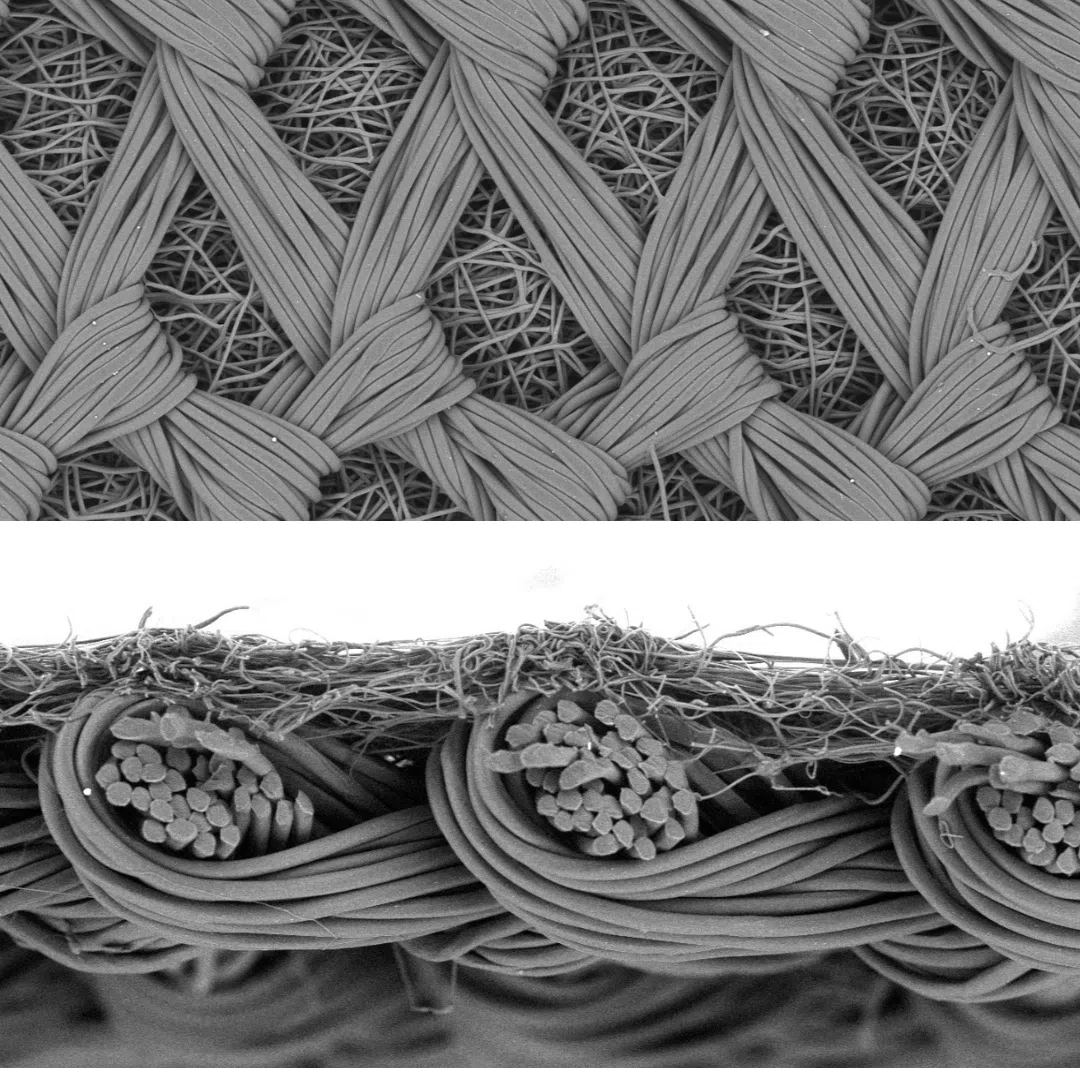

Coatings for wound healing
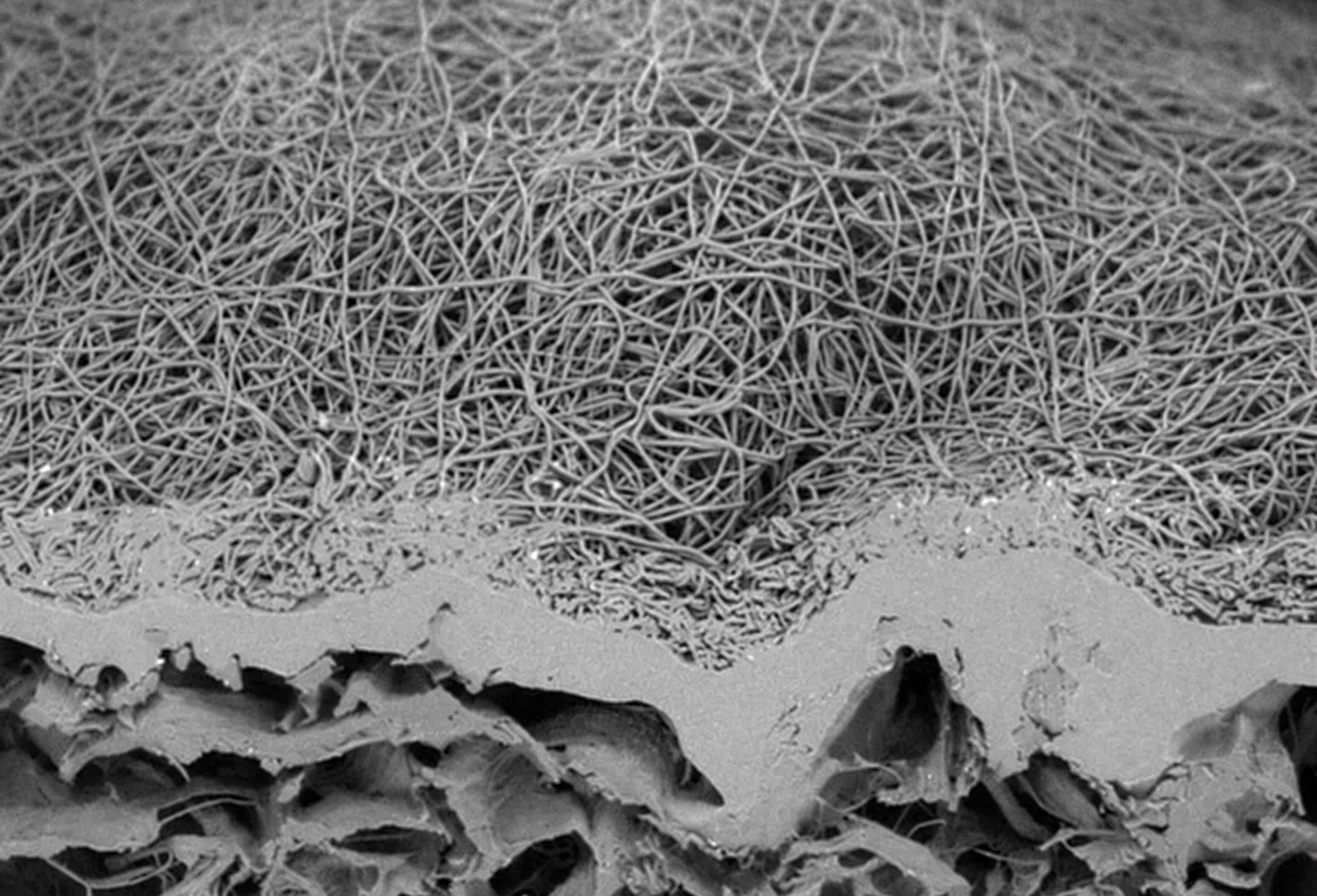
The Caladrix® technology is used to apply electrospun coatings or coverings directly onto compatible medical textiles and device structures.
For wound healing products, a coating can add a controlled fibre layer to an existing textile, with coverage, thickness, porosity, adhesion and flexibility developed around the application.
For a degradable wound care construct, coating materials and degradation requirements are assessed as part of the design.
Custom formats, sterilisation and packaging
Custom dimensions and formats
Material dimensions, shape, thickness and format are customised to the product design.
Packaging
Packaging options are defined around intended handling, sterilisation and the downstream manufacturing process.
Sterilisation assessment
Gamma irradiation, ebeam, and ethylene oxide (EtO) can be assessed for the selected material, substrate, format and packaging.
Product specific validation
Compatibility is confirmed through product specific testing and validation of the final configuration.
From prototype to scalable manufacture
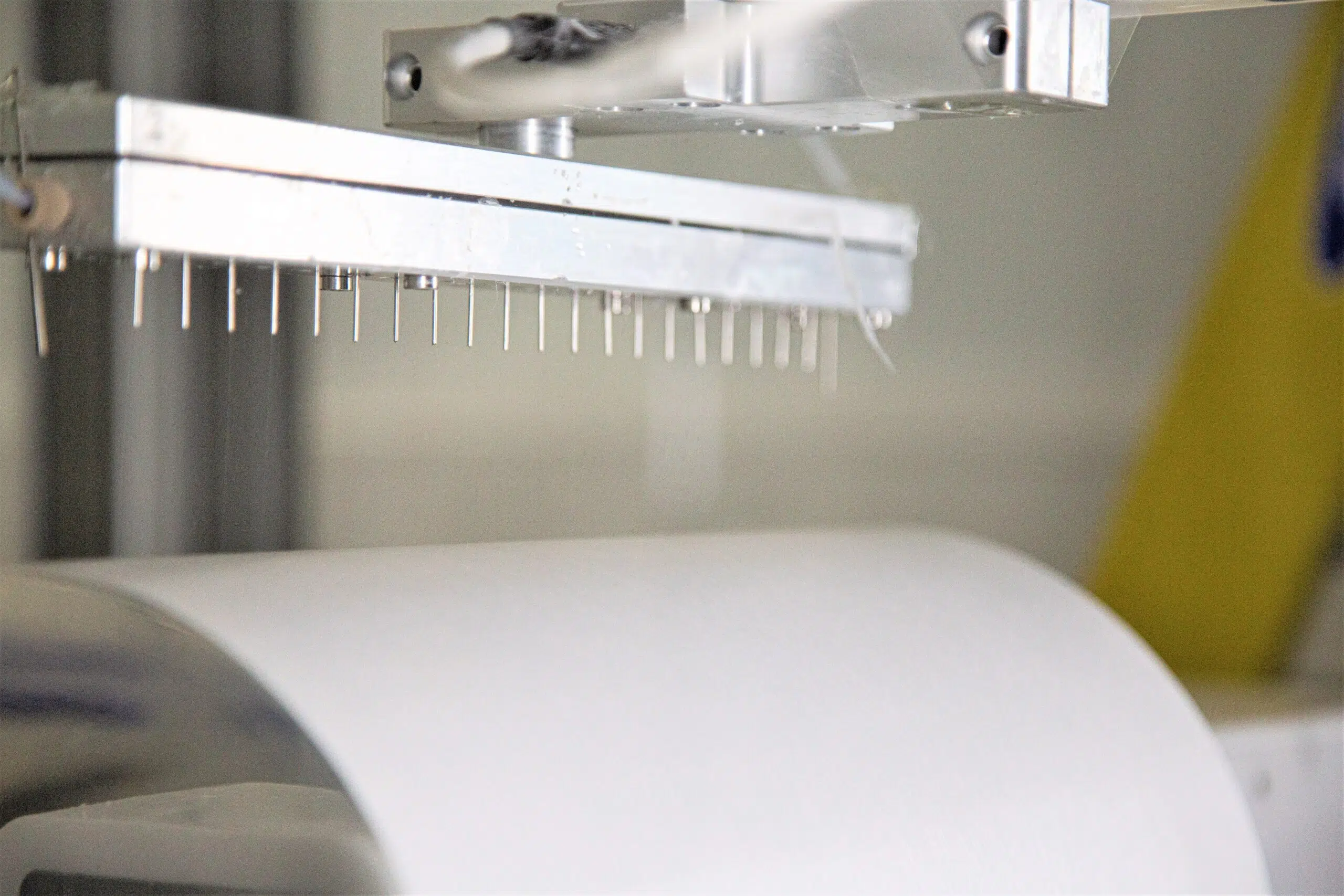
The Electrospinning Company develops and manufactures in ISO Class VII cleanrooms under an ISO 13485:2016 certified quality management system.
Projects can progress through product and process development, verification and validation, scale-up and manufacturing.
Validated testing is planned around the product’s critical requirements and intended use.
Cost of goods considered early
Material choice, process yield, conversion, sterilisation and packaging are considered against target costs, commercial pricing assumptions and the intended reimbursement pathway.
Our customer’s regulatory decisions shape our strategy
Our approach provides a structured framework to ensure compliance, quality and traceability throughout the design, development and manufacturing process, while being flexible enough to meet the complexity of diverse regulatory requirements.
Our team will align efforts with our customer’s regulatory plan, timelines and objectives.