Electrospun Membranes, Scaffolds and Coatings for Advanced Wound Healing
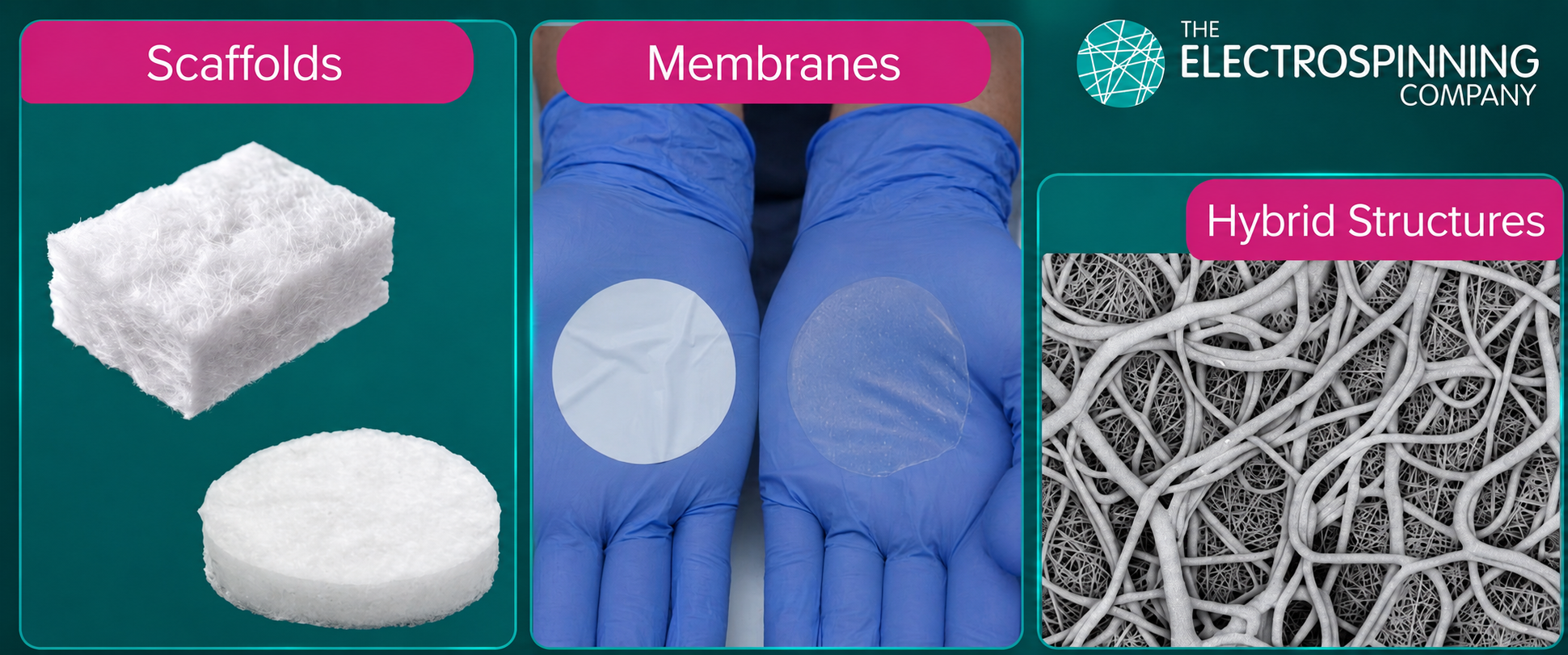
Wound healing programmes need material decisions that survive development, manufacturing, and clinical use. We develop electrospun wound healing membranes, scaffolds, hybrid structures, and coatings with the precise process control, material integration, and scalable manufacturing required for regulated commercialisation.
Where Electrospinning Transforms Performance
Electrospinning is critical when fibre architecture, moisture management, conformability, and tissue interaction dictate product performance. We support MedTech and regenerative medicine teams across diverse clinical contexts:
Skin Regeneration & Chronic Wound Healing
- Dynamic Exudate Control: Engineered fibre diameter and porosity to balance moisture retention, oxygen transfer, and exudate handling.
- Conformable Formats: Soft, flexible fibre architectures that perfectly conform to irregular wound beds and complex surfaces.
- Active Functionalisation: Ability to
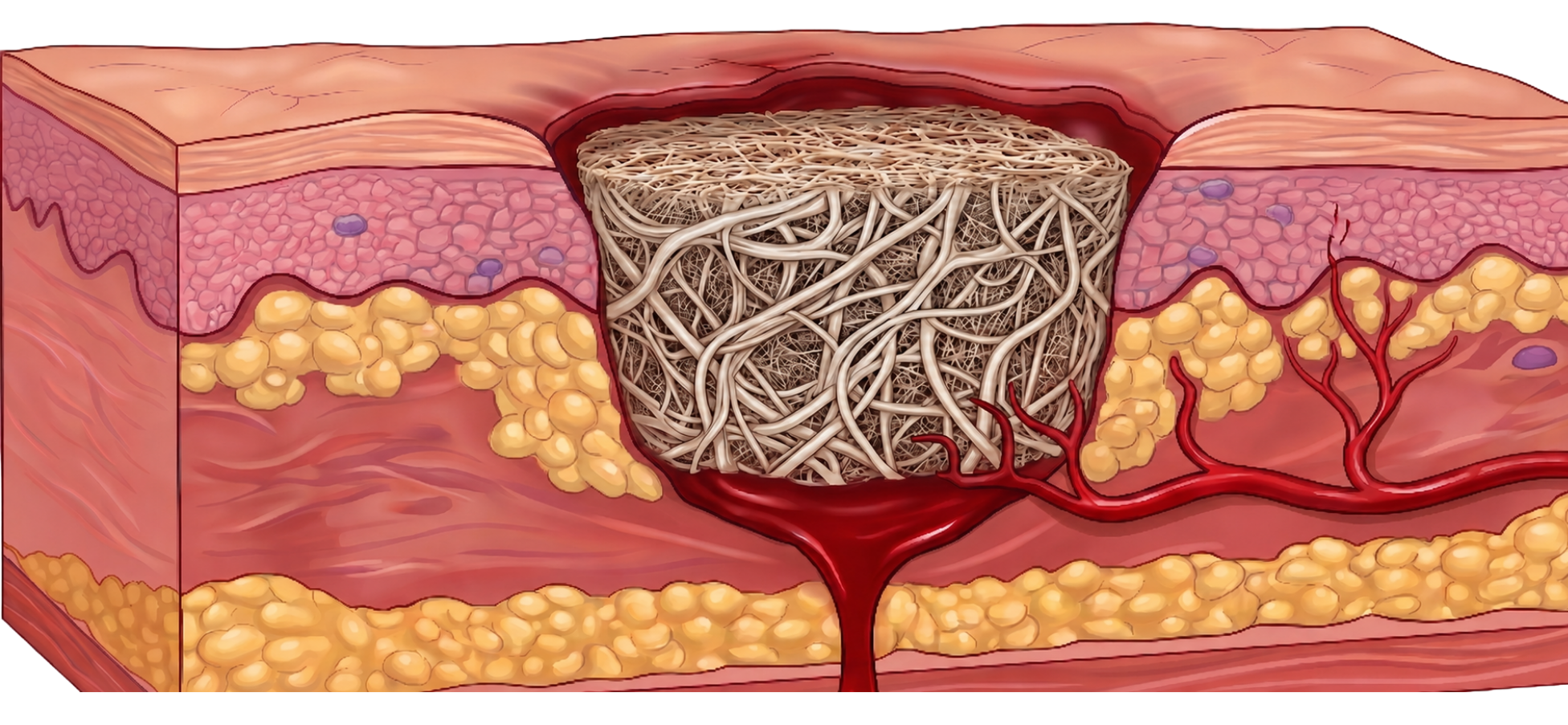 incorporate antimicrobials or functional agents directly into the wound-contact layer.
Applications: Chronic wounds, severe burns, trauma, and surgical healing.
Internal Soft Tissue & Organ Regeneration
Liver repair support, internal surgical healing, and resorbable tissue-support patches.
- Haemostatic Interfaces: Protective, temporary regenerative coverage that minimizes internal bleeding on delicate tissue surfaces.

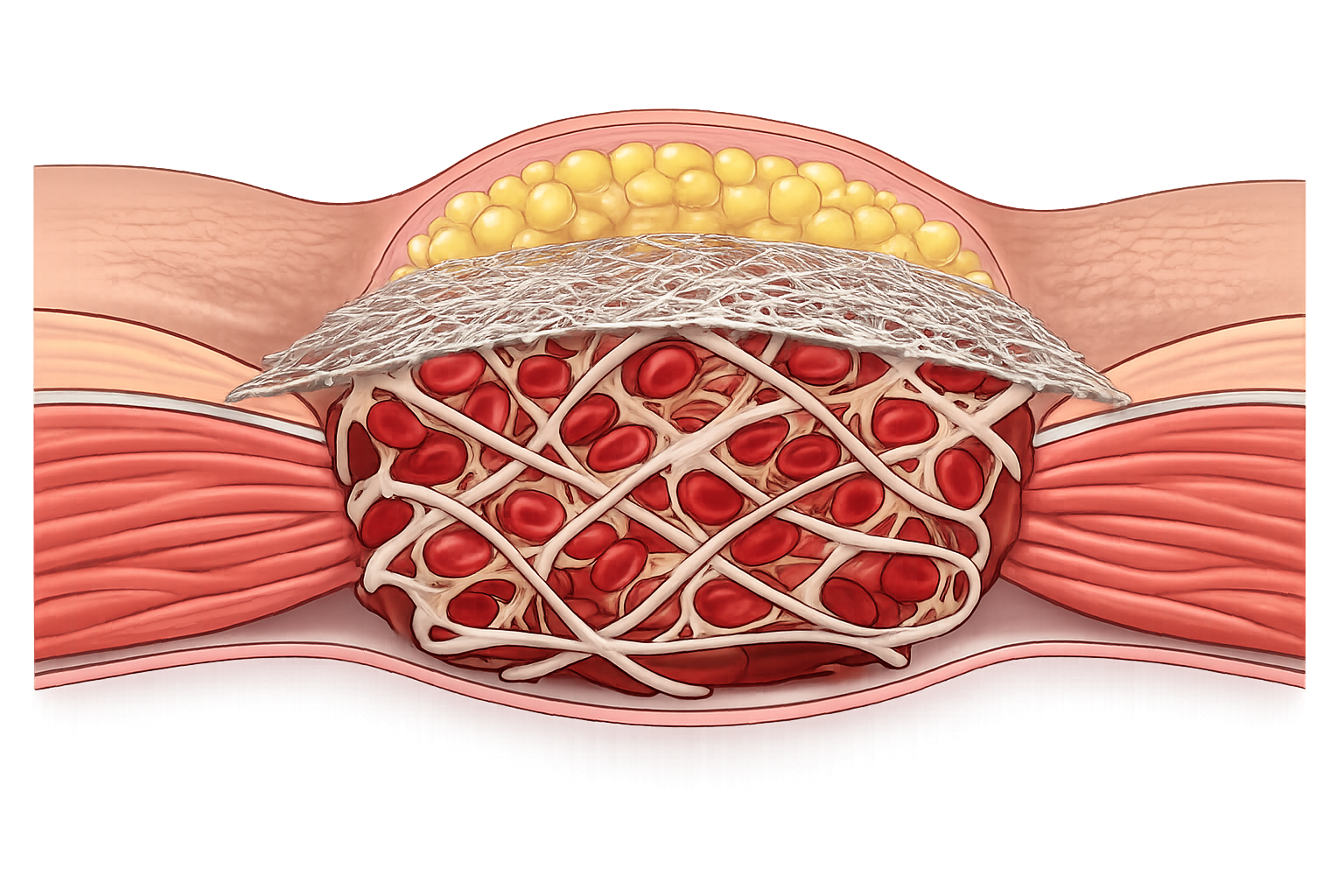
- Tunable Bio-Absorption: Implantable structures engineered to balance temporary mechanical support with controlled degradation to minimize inflammation.
Abdominal Wall & Hernia Healing
- Interface Control: Micro-structured barrier layers designed to minimise tissue tethering and adhesion formation.

- Hybrid Reinforcement: Combining electrospun fibres with structural surgical meshes or textiles without disrupting the primary device design.
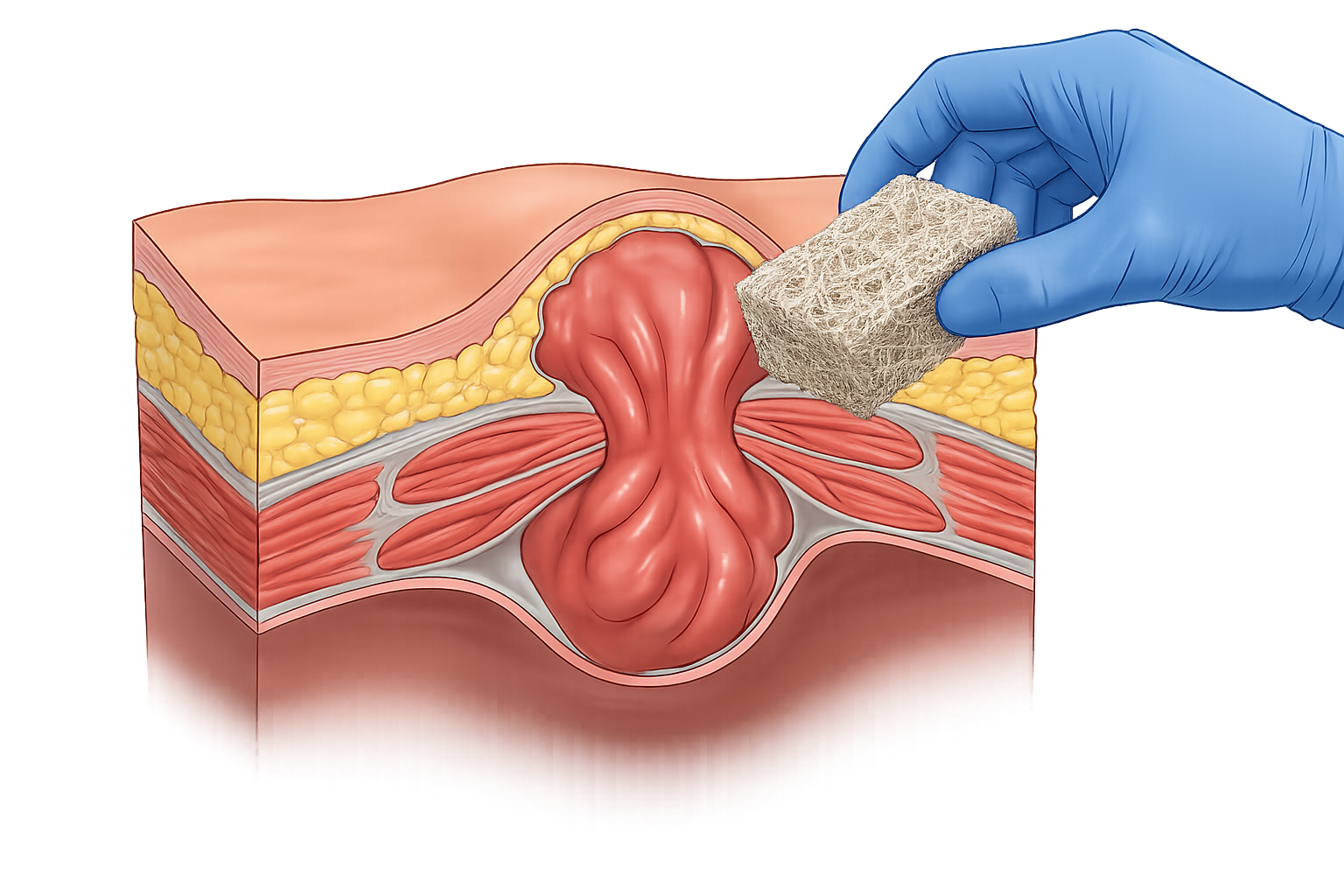
Applications: Hernia repair, internal adhesion barriers, and regenerative abdominal wall reconstruction.
Our Material technologies
We guide material selection based on your specific healing timeline, working with PCL, PLA, PLGA, TPU, collagen, hyaluronic acid, and chitosan.
Mimetix® scaffolds
Highly controlled, resorbable electrospun architectures optimized for soft tissue integration and scalable manufacturing.
Symatix® scaffolds
Hybrid scaffolds combining synthetic fibre architectures with natural polymers for enhanced fluid interaction and biological contact.
Testing of prototypes including microstructure, mechanical properties, adhesion, wetting and permeability.
Proof Beyond Feasibility
We don't just deliver research-stage concepts. The Electrospinning Company brings proven commercial and regulatory credibility to your project:
Proven Track Record:
10+ years of continuous medical device manufacturing experience.
Regulatory Pedigree:
Supplied components for multiple FDA 510(k)-cleared medical devices.
Deep Expertise:
Delivered more than 100 feasibility projects across wound healing, cardiovascular, orthopaedics, and soft tissue applications.
End-to-End Delivery:
Full support through clinical trial supply, regulatory documentation, development verification, and commercial process scale-up.
Explore the material decision before it becomes a programme challenge
We can help wound healing device teams assess whether an electrospun coating, membrane, scaffold or hybrid structure is the right fit before the material decision becomes embedded in the programme. The strongest next step is to discuss the application in the context of your device architecture, materials, performance requirements, evidence needs and development stage — then define what must be proven before validation, scale-up and regulatory exposure increase.