The push toward lower-profile implantable devices are increasingly reshaping how medical device teams approach coatings, materials, and system integration.
Conversations throughout MedTech Innovation 2026 reinforced a growing industry focus on achieving flexibility, conformability, and durability without increasing device bulk, particularly in minimally invasive and catheter-delivered applications where every layer directly affects deliverability, handling, and device performance.
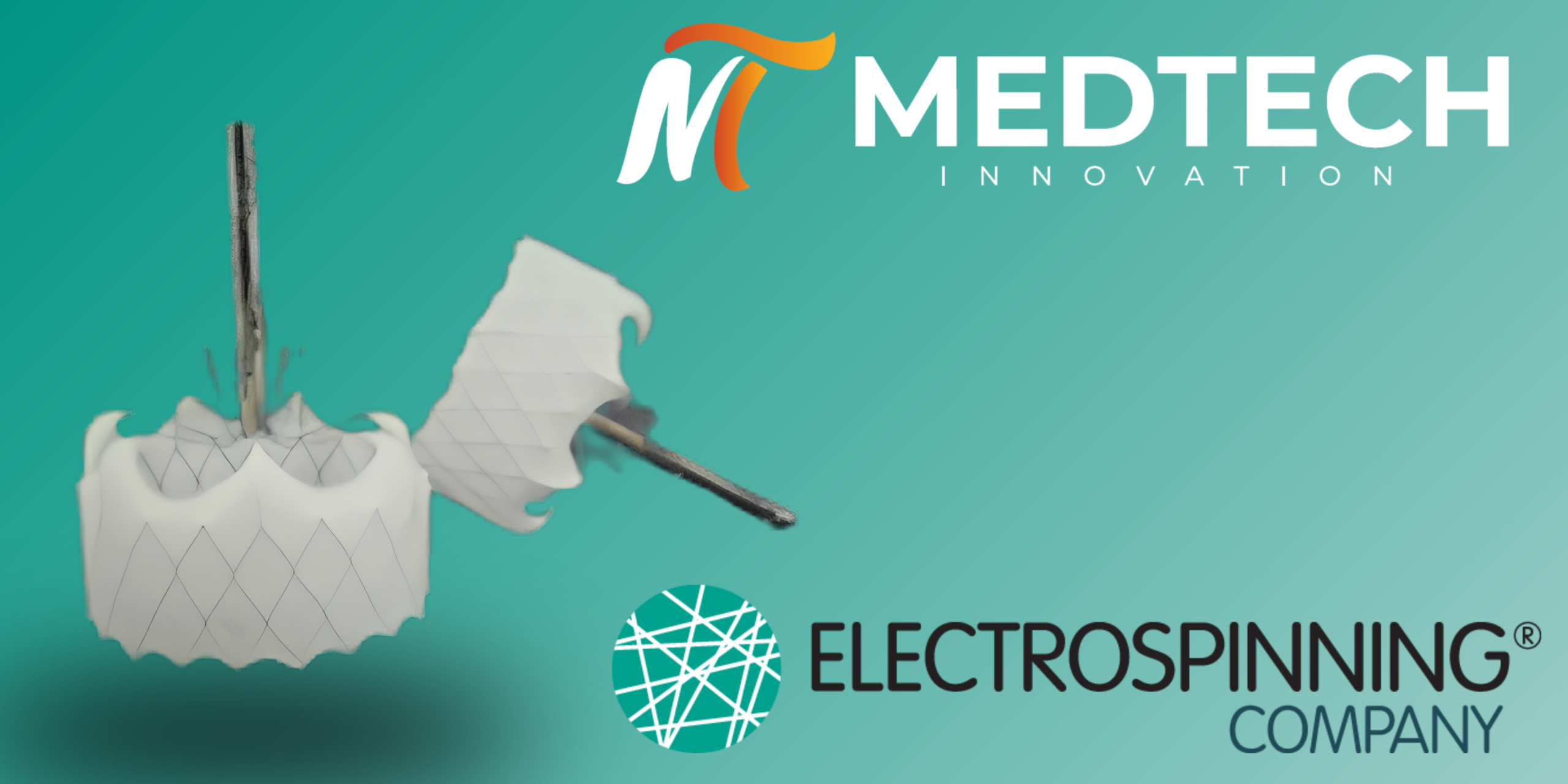
At The Electrospinning Company, discussions centred around Caladrix® technology and its ability to create ultra-thin electrospun functional coatings for implantable devices. Demonstrations of coated braided structures generated particularly strong interest from teams exploring next-generation cardiovascular and catheter-based systems, where reducing profile while maintaining robustness remains a major engineering challenge.
One theme emerged repeatedly during technical discussions: device developers are actively looking for alternatives to traditional coating and lamination strategies that can introduce additional thickness, stiffness, or assembly complexity. Electrospun architectures attracted attention because they offer highly conformal functional layers while preserving flexibility and minimising bulk.
The event also highlighted growing interest in hybrid device architectures that combine established woven or braided substrates with electrospun functional interfaces. Rather than replacing proven structural materials entirely, many development teams are instead exploring how electrospinning can enhance existing device platforms through surface functionality, controlled interfaces, and low-profile integration.
Importantly, conversations around electrospinning have also evolved. Among many device developers, the discussion is no longer centred on whether electrospinning is technically feasible, but how rapidly it can be integrated into commercially viable and manufacturable device platforms.
For implantable systems exposed to crimping, deployment, cyclic loading, and long-term mechanical stress, robustness remains critical. One of the strongest reactions during the event was the combination of thinness and mechanical integrity demonstrated by the coated braid structures, particularly compared with more conventional coating approaches. As minimally invasive systems continue to evolve, the industry focus is increasingly shifting toward technologies capable of delivering functionality without adding unnecessary profile or manufacturing complexity. The conversations at MedTech Innovation 2026 reinforced how electrospun coating technologies are becoming part of that next phase of device development.
Read more about Caladrix® technology and how electrospun coating architectures are supporting next-generation implantable device development.