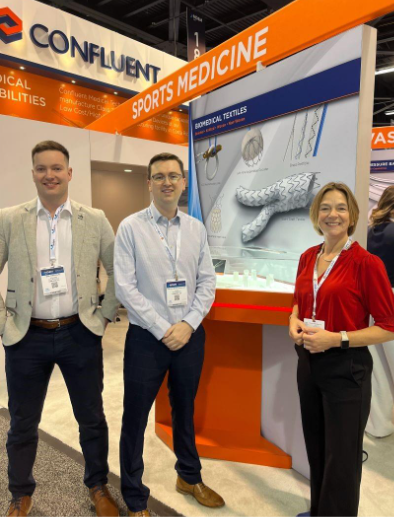
The Electrospinning Company recently participated in MD&M West 2026 in Anaheim, one of the world’s leading events for medical device innovation and manufacturing. Our discussions with device manufacturers, R&D leaders, and innovation teams revealed a clear shift in how electrospinning is viewed across the industry.
The question is no longer whether electrospinning works.
The focus has moved to whether it can be delivered reliably, at scale, and without introducing manufacturing risk.
Key Market Signals
- Electrospinning is now mainstream: Interest is moving beyond early feasibility studies toward clinical translation and commercial implementation. Many organisations are now exploring electrospun structures as part of active development programmes rather than exploratory research.
- Manufacturability is the primary concern: Process stability, batch-to-batch reproducibility, and early design for scale were consistently identified as critical factors. Companies are increasingly aware that material performance alone is not sufficient if the process cannot support regulated production.
- Integration risk is under scrutiny: Beyond fibre performance, discussions focused on practical considerations such as handling, assembly compatibility, sterilisation, and performance during deployment. Electrospun materials are being evaluated as complete manufacturing components, not just functional layers.
What This Means for the Industry
The electrospinning sector is entering a more mature phase. Programme risk is now driven less by achieving peak material performance and more by controlling variability, ensuring process robustness, and supporting regulatory readiness.
Development timelines are increasingly shaped by manufacturing strategy, quality systems, and scalability. Device companies are looking for partners who can contribute not only materials expertise but also guidance on design for manufacture, risk reduction, and technology integration.
The strongest demand is for solutions that combine:
- Functional biological or surface performance
- Mechanical integrity and handling reliability
- Controlled, scalable production within quality-managed environments
Across multiple application areas-including cardiovascular devices, wound care, implant coatings, sport medicine, and soft tissue repair-the same message emerged: translation risk, not material capability, is now the primary barrier to clinical and commercial success.
Electrospinning as a Core Medical Device Technology
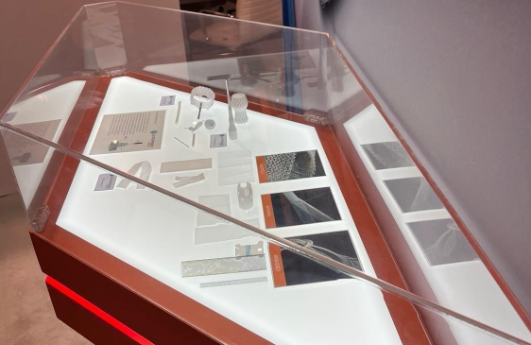
Electrospinning is no longer positioned as an emerging or experimental approach. It is becoming part of the core materials toolkit for advanced medical devices. As adoption grows, expectations are shifting toward industrial reliability, regulatory alignment, and predictable scale-up.
At The Electrospinning Company, our focus is aligned with this market direction: enabling electrospinning to move confidently from innovation to manufacturing through robust processes, controlled production, and ISO 13485-compliant systems.
MD&M West 2026 reinforced a clear industry trend: the future of electrospinning will be defined not only by what the material can do, but by how reliably it can be manufactured.